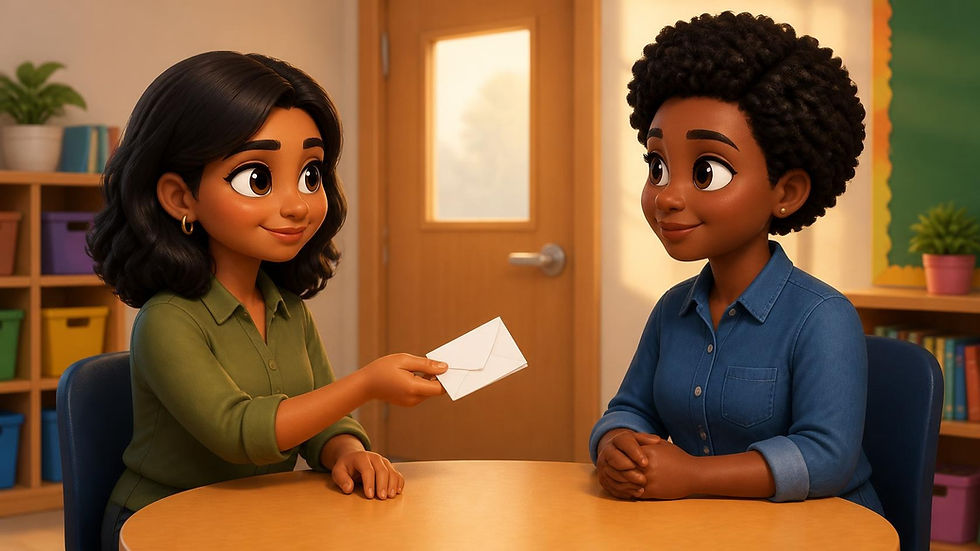
Room mom letter to parents
A room mom letter to parents is a welcome note, sent before any ask. It tells one class how you will reach them, what you actually need, and that no is a fine answer.
Show the note to the teacher before you send it. BCC the class, so families do not land in a reply-all thread. If the school already has a channel, use that one. The words can stay.
Here is a full note you can paste. Change the bracketed lines with what the teacher told you. Do not add a money ask to this letter. A collection, if there is one later, gets its own note, with an out.
The welcome email
Subject: Hello from the room parent
Hello,
I am the room parent for our class this year. I help with the notes, the parties, and the extras the teacher asks for. I do not run the whole school, and I will not fill your inbox.
Here is how I will reach you: [the channel the teacher approved], and not very often. If something is time-sensitive, I will say so in the first line.
What I actually need, when I need it, will be short. A date, a job, and a way to say you can help. If you cannot help, you do not owe a reason. No is a complete answer. You have not let the class down.
I will check plans with the teacher before I send them. If I get something wrong, reply to me, not the whole class, and I will fix the note.
Thank you for reading this. That was the whole ask.
Your room parent
Before you hit send
Read it once more against what the teacher said. If a line is still a guess, take it out. A shorter true note is better than a long one you have to correct on Friday.
BCC the class, and show the teacher the note before you send it. Those two steps save the reply-all and the "we do not do it that way."
A one-page welcome note you can print for a helper is on the free printables page, next to the class party checklist. The email above is the one that goes to families. The printable is the one you can hand to someone who said yes to a single job.
Send the welcome before you need anything. A first note that is already a signup reads like a bill. A first note that only says how you will write, and that no is allowed, makes the later note easier to read. Families can see you are not going to chase them.
If someone replies with a long reason they cannot help, thank them and stop. You do not need the story. You needed the no. If someone offers more than you asked, thank them and give them one job, not the whole afternoon. One clear yes is easier to keep than three vague ones.
Leave money out of this letter even if a collection is coming. A gift or a class fund, if the teacher wants one, gets its own short note later, with a date and a way to skip it. Mixing the hello with a payment is how a kind note starts to feel like pressure.
You do not need a clever sign-off. You need a clear channel, a small ask, and permission to pass.